Wondering whether Marvin HOA fees are worth it? You are not alone. If you are comparing neighborhoods in Marvin, it can be tricky to tell whether a higher monthly or annual fee buys real value or just adds another line item to your budget. The good news is that with the right questions, you can compare communities more clearly and avoid surprises. Let’s dive in.
Marvin’s amenity baseline matters
One of the most important things to understand about Marvin is that buyers are not choosing between "amenities" and "no amenities." The village already offers public recreation that can shape how much value you place on a neighborhood HOA package.
Marvin Efird Park includes community gardens, playgrounds, picnic areas, natural groomed walking trails, and a 9-hole disc golf course. Marvin also has a local trail network that includes the Marvin Loop, Town Hall Trail, Preserve Internal Trail, and the Marvin Efird Park Trail.
That matters because some buyers may not need a neighborhood pool, clubhouse, or private trail system if they already plan to use public parks and walking paths. In Marvin’s 2026 community survey, residents said they mainly use parks and trails for walking and biking, and most felt current parks and amenities were sufficient.
At the same time, the survey showed mixed opinions on walkable connectivity. Residents noted potential health and neighborly benefits, but they also raised concerns tied to privacy, safety, and property impacts. That nuance is helpful when you evaluate whether a community’s amenities truly match your lifestyle.
What HOA amenities look like in Marvin
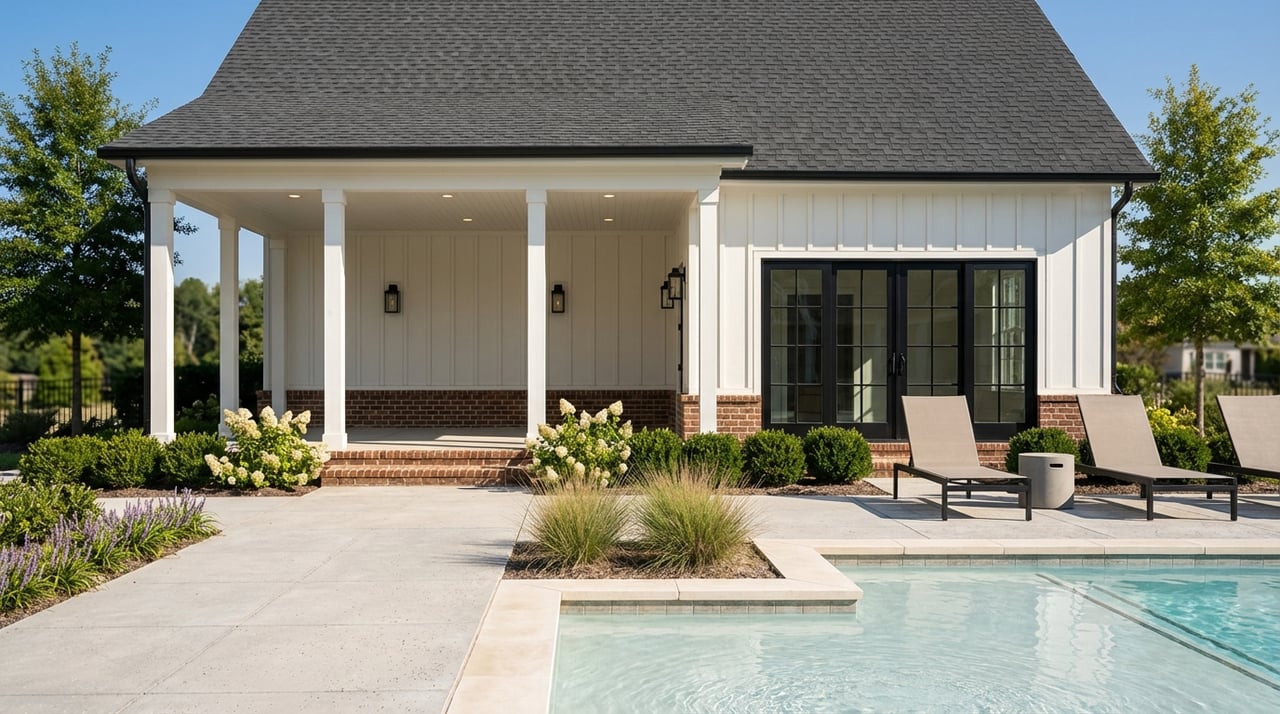
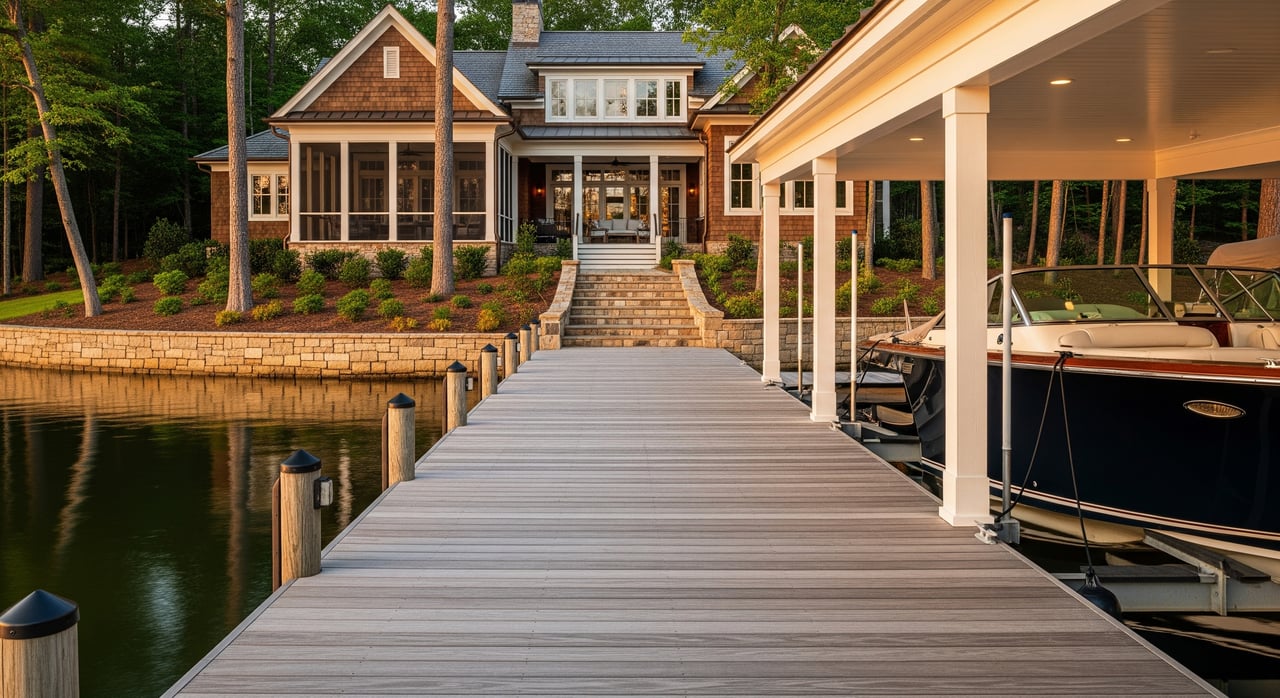
In Marvin, HOA amenities can vary a lot from one neighborhood to the next. Some communities offer a basic pool or walking trails, while others lean more toward a resort-style setup.
For example, Firethorne HOA says the community offers 18 holes of golf, a swim and tennis complex, and social events. Marvin Creek builder materials describe a 6,500-square-foot clubhouse with a beach pool, lazy river, geyser park, tennis courts, and multipurpose courts.
The Courtyards of Marvin lists a clubhouse or amenity center, fitness center, outdoor pool, walking and biking trails, scenic ponds and lakes, a demonstration kitchen, and a multipurpose room. These are very different amenity packages, which is why comparing fees without comparing what is actually included can lead you in the wrong direction.
HOA amenities are not always the same as club access
This is a key point in Marvin. In some neighborhoods, the HOA dues and the club dues are not the same thing.
Firethorne is a good example. The HOA fee is listed separately, while the club site markets Full Golf, Limited Golf, and Lifestyle memberships. That tells you a neighborhood can have a strong amenity identity, but some of the most visible features may require a second layer of membership cost.
If a listing highlights golf, tennis, or lifestyle perks, verify whether those are covered by HOA dues, offered as optional club memberships, or owned by a separate entity. That one question can completely change the true monthly or annual cost of ownership.
How Marvin HOA fees compare
Marvin HOA fees are not one-size-fits-all. Published examples in the market show a wide spread, which usually reflects differences in amenities, maintenance obligations, and community structure.
Here is a simple snapshot based on the research provided:
| Community | Published Fee Structure | Notable Context |
|---|---|---|
| Firethorne | $660 per year | HOA fee may be separate from club memberships |
| Marvin Creek | About $165 to $182 per month | Resort-style amenity package |
| The Courtyards of Marvin | About $225 to $235 per month | Includes lawn care and exterior maintenance |
The biggest takeaway is this: compare the annualized cost, not just the monthly number. A fee that looks manageable each month may be much more significant when you total it for the year.
Just as important, look at what the fee is buying. In The Courtyards of Marvin, the higher dues are not just about amenity access. The published fee also includes lawn care and exterior maintenance, which changes the value equation.
Higher dues are not always a bad deal
It is easy to assume lower fees are always better. In reality, the better question is whether the fee lines up with how you want to live.
If a neighborhood fee covers maintenance you would otherwise pay for out of pocket, the comparison shifts. Lawn care and exterior maintenance can reduce both your time commitment and your separate household expenses.
On the other hand, if you are paying for a large amenity package you rarely use, those dues may feel less worthwhile over time. A lazy river, fitness center, or tennis complex may sound great on paper, but the actual value depends on your household’s habits.
A simple way to evaluate value
When you compare Marvin communities, ask yourself:
- Will you use the pool, trails, clubhouse, or courts regularly?
- Are you also paying for maintenance services that reduce your to-do list?
- Do any amenities require a separate club membership?
- Would nearby public parks and trails meet most of your recreation needs?
- Does the annual cost fit comfortably into your long-term housing budget?
That short checklist can help you separate lifestyle value from marketing language.
How amenities may affect resale
Amenities can help resale, but they are not a free lunch. The benefit tends to depend on upkeep, location, and whether the amenity package matches what buyers in that area expect.
The research provided shows a generally positive relationship between recreation features and home values. One study found trails, greenbelts, and greenways associated with roughly 2%, 4%, and 5% premiums, while neighborhood playgrounds, tennis courts, and pools each added roughly 2% in that study area.
A 2019 review of 33 studies also found that home values generally rise as proximity to a park increases. However, homes immediately adjacent to a park can sometimes receive a smaller premium than homes a block or two away.
For Marvin, the practical takeaway is pretty balanced. Pools, trails, and clubhouses may support resale when they are well maintained and fit local buyer expectations, but a larger fee burden only makes sense if the market values those features or your household genuinely uses them.
Marvin’s 2026 survey supports that balanced view. Residents generally favored low-impact, family-friendly improvements more than major new recreation projects, and some tied walking-path discussions to cost and privacy concerns.
What to verify before you buy
If a Marvin listing mentions an HOA, amenity center, clubhouse, or pool, do not stop at the marketing remarks. You want to confirm what exists, who owns it, and what your dues actually cover.
The most useful documents to review are:
- The declaration
- The bylaws
- The current budget
- Annual financial statements
- Meeting minutes
- The current assessment or resale statement
Under North Carolina’s Planned Community Act, associations are responsible for common elements and can assess owners for common expenses. The law also requires associations to keep financial records and make an annual income-and-expense statement and balance sheet available within 75 days after year-end.
That same law requires a statement of unpaid assessments to be provided within 10 business days after a request. It also says unpaid assessments that remain unpaid for 30 days or longer can become a lien.
Questions worth asking during due diligence
As you compare HOA neighborhoods in Marvin, these questions can be especially helpful:
- Are the amenities HOA-owned, club-owned, or simply nearby public amenities?
- Are there any separate membership fees beyond the base HOA dues?
- What services are included in the dues?
- Has the association provided recent financial statements and budget information?
- Do meeting minutes reveal any upcoming projects or cost concerns?
- Is there any unpaid assessment balance attached to the property?
These questions help you move beyond the sales pitch and into the real cost of ownership.
How to weigh the tradeoffs in Marvin
For many buyers, the right answer in Marvin comes down to lifestyle fit. If you want a low-maintenance setup and plan to use neighborhood amenities often, higher dues may be a reasonable tradeoff.
If you prefer to keep fixed housing costs lower and expect to use Marvin’s public parks and trails instead, a simpler HOA structure may feel like the better choice. Neither option is automatically better. The goal is to match the fee structure to how you actually live.
That is especially important in a market like Marvin, where communities can look similar at first glance but operate very differently once you dig into amenity ownership, maintenance coverage, and club membership layers. A careful side-by-side review can save you money and help you feel more confident in the home you choose.
When you are weighing HOA tradeoffs, local context matters. Knowing how Marvin neighborhoods compare, what buyers tend to notice, and where the hidden cost differences show up can make your search much easier.
If you want help comparing Marvin neighborhoods, reviewing fee structures, or narrowing in on the right lifestyle fit, Jeremy Ordan is here to help.
FAQs
What do HOA fees usually cover in Marvin neighborhoods?
- HOA fees in Marvin can cover common area maintenance, amenity access, and in some communities, services like lawn care and exterior maintenance. What is included varies widely by neighborhood.
Are club memberships included in Marvin HOA dues?
- Not always. In some Marvin communities, HOA dues and club memberships are separate, so you should verify whether golf, tennis, or lifestyle access requires an additional fee.
How can you compare HOA fees between Marvin communities?
- Start by converting every fee to an annual cost, then compare what is included, whether maintenance services are covered, and whether any amenities require separate membership costs.
Do HOA amenities help home values in Marvin?
- Amenities can support resale when they are well maintained and aligned with buyer expectations, but the value impact depends on context, upkeep, and whether the fee burden makes sense for the market.
What documents should you review before buying in an HOA in Marvin?
- You should review the declaration, bylaws, current budget, annual financial statements, meeting minutes, and the current assessment or resale statement to better understand costs and obligations.